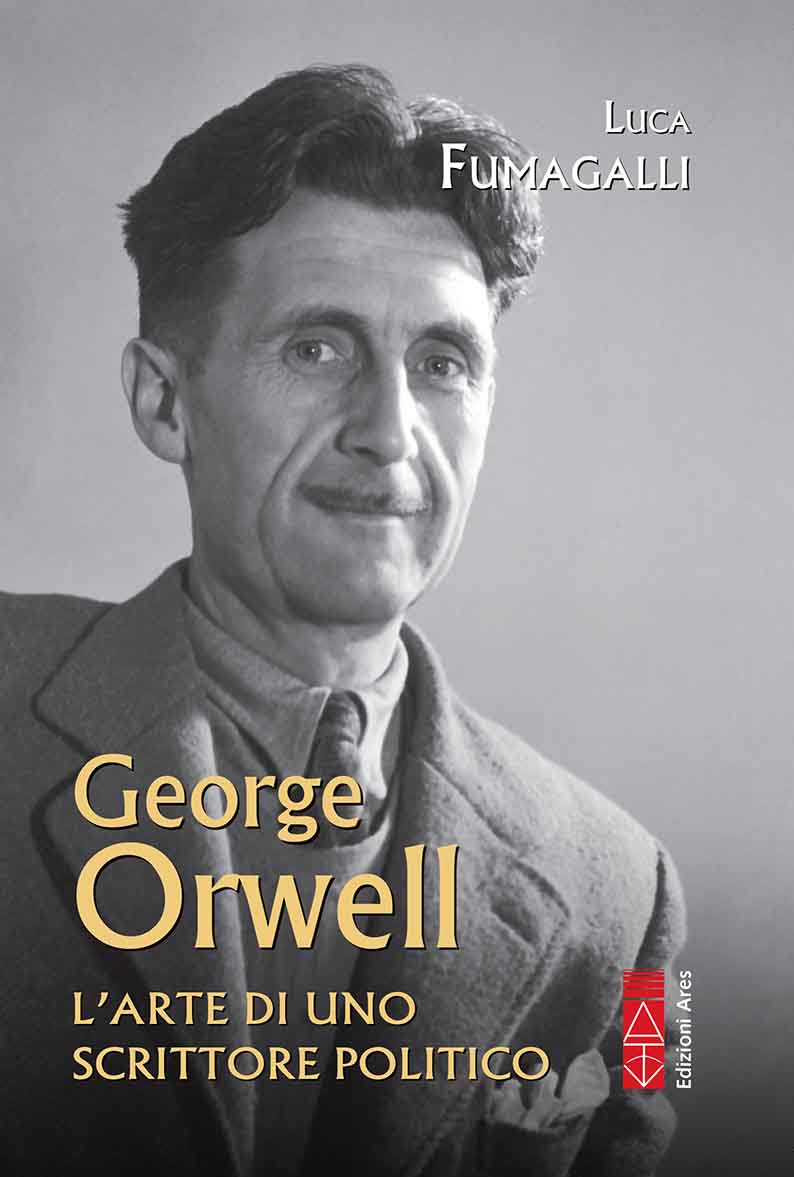
George Orwell
L’arte di uno scrittore politico
Prefazione di Paolo Gulisano.
€15,00 €9,00
Spese di spedizione per l’Italia: 5,60 €
SPEDIZIONE GRATUITA PER ORDINI SOPRA I 30,00 €
Vedi dettagli e opzioni di spedizione
Disponibile


George Orwell (1903-1950) non ha certo bisogno di presentazioni. Con La fattoria degli animali e 1984 ha infatti firmato due classici della letteratura del Novecento che seguitano a essere letti e apprezzati in tutto il mondo, Italia compresa. Ne è la riprova l’aggettivo “orwelliano”, ormai entrato a far parte del linguaggio comune, che evoca scenari distopici e inquietanti.
Tuttavia, come può capitare quando si ha a che fare con autori molto noti, nel corso dei decenni non sono mancate le banalizzazioni della sua opera né le cattive interpretazioni, eludendo così la complessità – e a volte persino la contraddittorietà – di uno scrittore che spese la sua breve vita ad affinare le armi della letteratura per difendere dagli assalti del totalitarismo ciò che gli stava più a cuore, innanzitutto la verità e la libertà.
A 75 anni dalla sua scomparsa, il libro di Luca Fumagalli ripercorre la bibliografia di Orwell alla luce delle più recenti acquisizioni, mettendo in evidenza, romanzo dopo romanzo, l’emergere dello “scrittore politico”, del socialista anti-ideologico per cui l’unica cosa che contava davvero era la realtà, ossia l’oggettività dei fatti.
Fumagalli Luca
Informazione cattolica: Orwell, tra utopie e incubi della realtà
Scarica PDFil Giornale: Sulle orme di George Orwell, il libertario incompreso
Scarica PDFPangea - Orwell contro tutti. Dialogo intorno allo scrittore più citato (e frainteso) di sempre
Scarica PDFLibero - George Orwell. Il ribelle politico che smascherò i dittatori (R. Pretto)
Scarica PDFGeorge Orwell (1903-1950) certainly needs no introduction. With Animal Farm and Nineteen Eighty-Four, he wrote two classics of twentieth-century literature that continue to be read and appreciated all over the world, including Italy. Proof of this is the adjective “Orwellian”, which has now become part of everyday language, evoking dystopian and disturbing scenarios.
However, as can happen when dealing with very well-known authors, over the decades there has been no shortage of trivialisations and misinterpretations of his work, thus eluding the complexity – and sometimes even the contradictions – of a writer who spent his short life honing the weapons of literature to defend what was most dear to him, above all truth and freedom, from the assaults of totalitarianism.
Seventy-five years after his death, Luca Fumagalli’s book retraces Orwell’s bibliography in the light of the most recent acquisitions, highlighting, novel after novel, the emergence of the “political writer”, the anti-ideological socialist for whom the only thing that really mattered was reality, i.e. the objectivity of facts.